

A brain injury can be devastating, affecting everything from your ability to work to your relationships with loved ones. If someone else’s negligence caused your injury, you might be entitled to claim compensation. This guide explains your rights and the steps you can take to pursue a personal injury claim in the UK.
- Brain Injury: Understanding Your Rights After an Accident
- Is My Brain Injury a Personal Injury Case?
- Concussion Lawsuit: When Can You Sue?
- Legal Steps to Take After a Brain Injury
- Proving Negligence in Your Brain Injury Claim
- Damages You Can Recover in a Personal Injury Case for Brain Injury
- Get Legal Help: Taking Action After Your Brain Injury
Brain Injury: Understanding Your Rights After an Accident
Brain injuries are complex and can range from mild concussions to severe, life-altering conditions. The effects can be physical, cognitive, and emotional. Common causes of brain injuries include road traffic accidents, falls, workplace accidents, and assaults. Understanding that you have rights following such an incident is the first step to getting the support and compensation you deserve. In the UK, the law provides avenues for seeking redress when another party’s actions, or lack thereof, lead to your injury.
Is My Brain Injury a Personal Injury Case?
Not all brain injuries automatically qualify for a personal injury claim. Someone else’s negligence must have caused your injury to have a valid claim. Negligence, in legal terms, means that the other party had a duty of care towards you, they breached that duty, and that breach directly resulted in your brain injury.
For instance, imagine a construction worker not wearing appropriate safety gear who sustains a head injury because of falling debris. If their employer failed to provide the required safety equipment, they could be considered negligent, potentially leading to a personal injury claim. Similarly, if a driver runs a red light and causes a car crash, resulting in a brain injury to another driver, the at-fault driver’s negligence could form the basis of a claim.
The severity of the injury doesn’t necessarily determine eligibility; even a mild concussion resulting from negligence can be grounds for a claim, especially if it leads to persistent symptoms and financial losses.
Concussion Lawsuit: When Can You Sue?
You might consider a “concussion lawsuit” when your concussion is the direct result of someone else’s negligence. The term “concussion lawsuit” is generally used to describe legal action specifically about concussion injuries. Some examples include sports-related incidents where protocols for concussion management were not followed, or slips and falls in public spaces due to hazardous conditions that were not adequately addressed.
A recent example highlighting the potential for sports-related concussion claims involves increasing scrutiny of professional sports leagues regarding the long-term effects of repeated concussions on players. While specific data on successful settlements in these cases is often confidential, the growing awareness and mounting evidence of these long-term impacts are changing the legal landscape. The key is demonstrating that the other party knew, or should have known, about the risks and failed to take reasonable steps to prevent the injury.
Legal Steps to Take After a Brain Injury
Following a brain injury, taking the proper steps is crucial for your health and any potential legal claim.
- Seek Immediate Medical Attention: This is paramount, not only for your well-being, but also to create a medical record documenting the injury and its severity.
- Report the Incident: If your injury occurred publicly or at work, ensure the incident is officially reported.
- Gather Evidence: Collect any evidence related to the accident, such as photos, witness statements, and police reports.
- Keep Detailed Records: Document all medical treatments, therapies, and expenses related to your injury. Note how your injury has affected your daily life and ability to work.
- Consult a Solicitor: A specialist personal injury solicitor experienced in brain injury cases can advise you on the strength of your claim and guide you through the legal process.
Proving Negligence in Your Brain Injury Claim
Proving negligence is fundamental to a successful claim. You need to demonstrate that the other party owed you a duty of care, breached that duty, and that this breach directly caused your brain injury. This can involve gathering evidence such as witness statements, CCTV footage, expert medical reports, and accident reports.
Insurance companies play a significant role in these claims. They will investigate the incident and attempt to minimise their payout. Therefore, it’s essential to have a solicitor who can effectively negotiate with the insurance company on your behalf and build a strong case based on factual evidence and medical expertise.
Pre-existing conditions can also complicate matters. If you had a prior head injury, the other party’s insurance company might argue that your current symptoms are solely related to the old injury. A skilled solicitor will work with medical experts to demonstrate how the recent incident exacerbated your pre-existing condition or caused a new, distinct injury.
Damages You Can Recover in a Personal Injury Case for Brain Injury
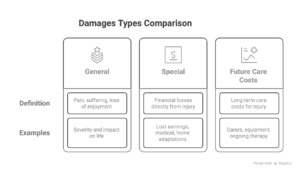
Compensation in a brain injury case aims to cover the losses you have incurred due to the injury. This can include:
- General Damages compensate for the pain, suffering, and loss of amenity (loss of enjoyment of life) caused by the injury. The amount will depend on the severity of your injury and its impact on your life.
- Special Damages: These cover financial losses directly related to your injury. Examples include lost earnings (past and future), medical expenses (including rehabilitation and therapy), cost of care, and adaptations to your home.
- Future Care Costs: Serious brain injuries often require long-term care. Compensation can cover the cost of carers, specialist equipment, and ongoing therapy.
Successful brain injury claims have resulted in substantial settlements reflecting the life-altering nature of these injuries. While each case is unique, awards in the hundreds of thousands, and even millions, of pounds are possible for severe brain injuries requiring extensive care and impacting long-term earning potential.
Get Legal Help: Taking Action After Your Brain Injury
Dealing with the aftermath of a brain injury is overwhelming. Seeking legal assistance from a specialist personal injury solicitor is essential to protect your rights and ensure you receive the compensation you deserve. A solicitor can investigate the circumstances of your injury, gather evidence, negotiate with insurance companies, and represent you in court if necessary. Moreover, they can connect you with support groups and rehabilitation centres tailored to brain injury survivors, providing crucial resources for your recovery journey. Don’t delay; seeking legal advice as soon as possible will give you the best chance of a successful claim and secure your future.