

Being injured at work can be a stressful and confusing experience. Workers’ compensation is designed to provide a safety net, but knowing your rights and responsibilities is crucial. This guide provides essential information to help injured workers understand and access the benefits they deserve.
- Understanding Workers’ Compensation: A Lifeline for Injured Workers
- Reporting Your Injury: Your First Steps to Workers’ Compensation Benefits
- Workers’ Compensation Benefits: What You’re Entitled To
- The Workers’ Compensation Claim Process: A Step-by-Step Guide
- Common Workers’ Compensation Claim Denials: And How to Fight Them
- Returning to Work After a Workers’ Compensation Injury: Your Rights and Options
- When to Seek Legal Help for Your Workers’ Compensation Case: Protecting Injured Workers
Understanding Workers’ Compensation: A Lifeline for Injured Workers
Workers’ compensation, often called “workman’s comp,” is a form of insurance that provides financial and medical benefits to employees who are injured or become ill as a direct result of their job. It covers medical expenses, lost wages, and sometimes vocational rehabilitation if you can’t return to your old job. The system operates on a “no-fault” basis, meaning you can generally receive benefits regardless of who was at fault for the accident. This means you don’t usually need to prove your employer was negligent, although there are exceptions (more on that later).
Reporting Your Injury: Your First Steps to Workers’ Compensation Benefits
The first thing to do after sustaining an injury at work is to report it to your employer immediately. Don’t delay! Most places have strict deadlines for reporting injuries – often within 30 days, but it’s best to do it as soon as possible.
- Tell your supervisor: Inform them about the injury, how it happened, and what body parts were affected.
- Seek medical attention: See a doctor or go to a hospital. Tell the medical professional that your injury is work-related. This is essential for documenting your injury and establishing a link between your work and your condition.
- Fill out an accident report: Your employer should provide you with an accident report form. Complete it accurately and keep a copy for your records.
Workers’ Compensation Benefits: What You’re Entitled To
Workers’ compensation typically provides several types of benefits:
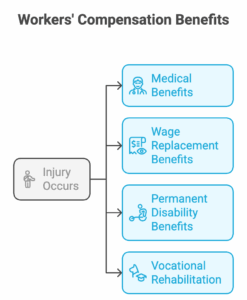
- Medical Benefits: This covers all necessary medical treatment related to your injury, including doctor visits, hospital stays, medication, and physical therapy.
- Wage Replacement Benefits: If you can’t work due to your injury, you’re entitled to receive a portion of your lost wages. The exact percentage varies by jurisdiction, but is often around two-thirds of your average weekly wage before the injury.
- Permanent Disability Benefits: If your injury results in a permanent impairment, such as loss of function, you may be eligible for additional benefits. This is usually determined by a medical evaluation.
- Vocational Rehabilitation: If you can’t return to your previous job, workers’ compensation may cover the cost of retraining for a new role.
The Workers’ Compensation Claim Process: A Step-by-Step Guide
- Report the injury: As mentioned above, report the injury to your employer promptly.
- File a claim: Your employer (or their insurance company) will typically file a claim with the workers’ compensation board or agency in your area. You may also need to file a claim yourself; your employer should give you the required form.
- Investigation: The insurance company will investigate your claim, which may involve gathering medical records and interviewing witnesses.
- Decision: The insurance company will either approve or deny your claim.
- Appeal (if necessary): If your claim is denied, you have the right to appeal the decision. The appeals process varies but usually involves submitting additional information or requesting a hearing.
Common Workers’ Compensation Claim Denials: And How to Fight Them
Unfortunately, workers’ compensation claims are sometimes denied. Common reasons for denial include:
- Disputed injury: The insurance company may argue that your injury wasn’t work-related.
- Lack of medical evidence: Insufficient documentation of your injury or treatment.
- Pre-existing condition: The insurance company may claim that your injury is due to a pre-existing condition, not your work.
- Late reporting: Failing to report the injury within the required timeframe.
If your claim is denied, don’t give up! You have the right to appeal. Gather all relevant documentation, including medical records, accident reports, and witness statements. Consider seeking legal advice from a workers’ compensation solicitor to help you navigate the appeals process.
Returning to Work After a Workers’ Compensation Injury: Your Rights and Options
Returning to work after an injury can be daunting. Your employer may offer you modified duties or a different role that accommodates your limitations. You have the right to:
- A safe working environment: Your employer is responsible for ensuring your safety at work.
- Reasonable accommodations: Your employer should make reasonable adjustments to your job to accommodate your injury.
- Refuse unsafe work: You have the right to refuse to perform tasks that could further injure you.
If you’re unable to return to your previous job, workers’ compensation may cover vocational rehabilitation to help you find a new role.
When to Seek Legal Help for Your Workers’ Compensation Case: Protecting Injured Workers
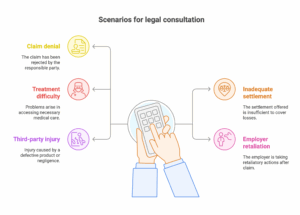
While many workers’ compensation claims are straightforward, some situations warrant legal assistance. Consider consulting a workers’ compensation solicitor if:
- Your claim is denied.
- You’re offered a settlement that doesn’t adequately compensate you for your losses.
- You’re having difficulty getting medical treatment.
- You believe your employer is retaliating against you for filing a claim.
- Your injury was caused by a third party (e.g., a defective product or the negligence of another contractor). This can potentially open the door to a separate personal injury claim in addition to workers’ compensation. For instance, if faulty machinery caused your injury, you might have a case against the machinery manufacturer. Successfully pursuing a third-party lawsuit can lead to significantly higher compensation than workers’ compensation alone, covering pain and suffering in addition to medical bills and lost wages. However, these cases can be complex and require careful investigation to establish liability.
The solicitor can advise you on your rights, negotiate with the insurance company, and represent you in court if necessary. They will also understand the nuances of state-specific laws which are often vital to the successful prosecution of a claim. The interaction between workers’ compensation and other benefits such as Medicare/Medicaid can also be complex, requiring expert advice to ensure you aren’t inadvertently penalised. Structured settlements are sometimes offered, but require careful assessment to ensure they meet your long-term needs.