
Key Takeaways
- Social media platforms use algorithms and features like speed filters that may encourage dangerous driving behavior.
- The legal landscape is shifting from focusing solely on driver negligence to exploring product liability for app developers.
- Section 230 of the Communications Decency Act no longer provides absolute immunity for design defects that lead to physical harm.
- Digital forensics, including metadata and application logs, are essential for proving distraction at the time of a collision.
- Recent court rulings, such as Lemmon v. Snap, Inc., have established precedents for suing tech companies over hazardous app features.
How has social media changed the landscape of distracted driving?
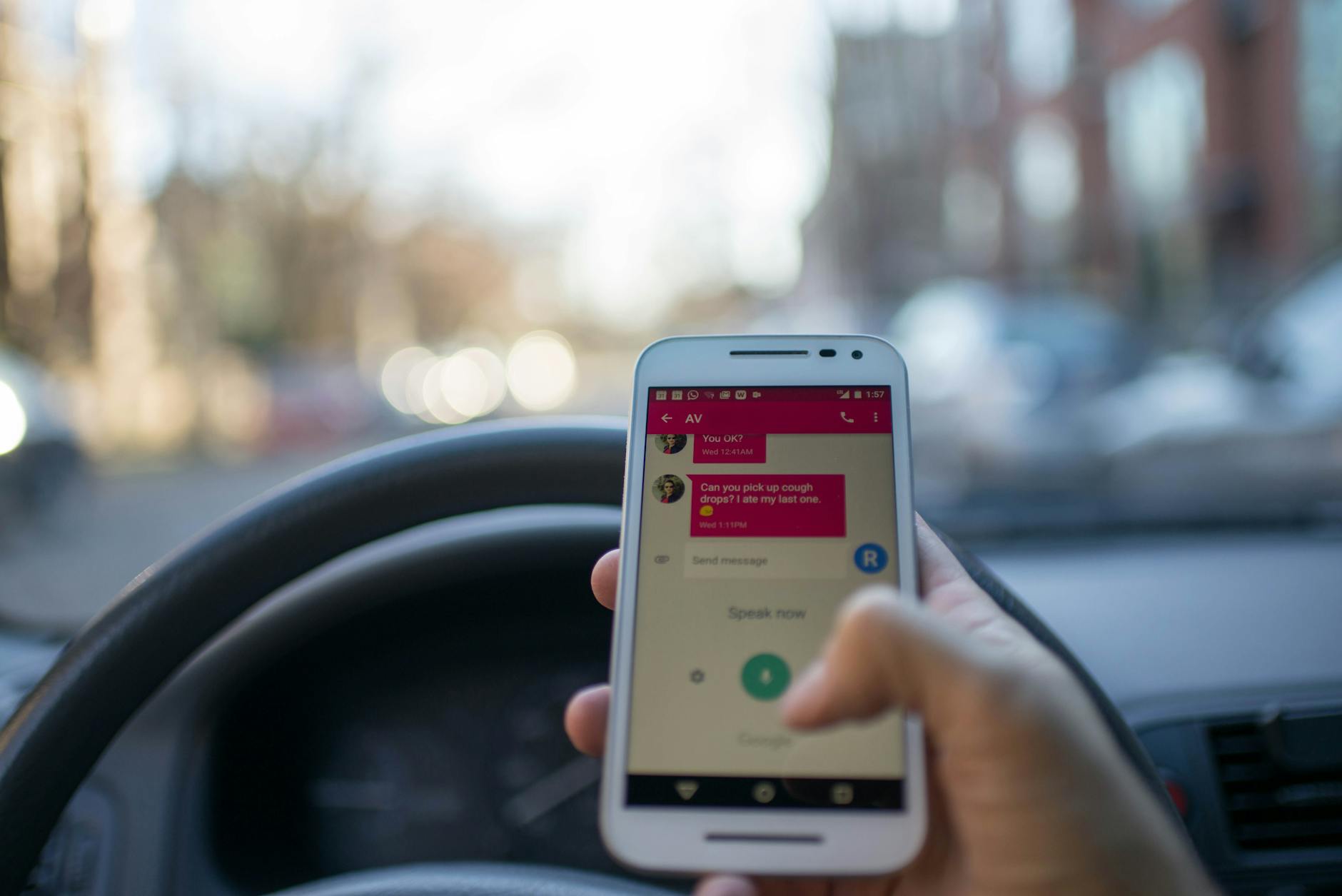
The landscape of vehicular negligence has undergone a seismic shift over the last decade. While traditional distracted driving litigation once centered on cellular phone calls and text messaging, the contemporary legal environment is increasingly defined by social media engagement. For the personal injury practitioner, this evolution necessitates a sophisticated understanding of both digital forensics and the fluctuating boundaries of product liability law. As social media platforms employ increasingly addictive algorithms designed to maximize time-on-app, the line between individual driver negligence and corporate design defect has begun to blur.
- Key Takeaways
- How has social media changed the landscape of distracted driving?
- Can social media companies be held liable for car accidents?
- What role do design defects play in distracted driving litigation?
- How is digital forensics used to prove social media distraction?
- What are the legal hurdles in causation and defense strategies?
- What does the future hold for social media injury law?
- FAQs
- What is the significance of Lemmon v. Snap, Inc. for injury lawyers?
- How does Section 230 of the CDA impact these lawsuits?
- What digital evidence is most critical in a distracted driving case?
- Can a passenger be held liable for a driver’s social media distraction?
- What are the challenges in proving app usage at the exact moment of impact?
- Sources
Distracted driving remains a primary catalyst for catastrophic motor vehicle accidents in the United States. According to the National Highway Traffic Safety Administration, 3,308 people were killed in motor vehicle crashes involving distracted drivers in 2022 alone. This accounts for approximately 8 percent of all fatal crashes reported that year. Data from the Centers for Disease Control and Prevention indicates that reaching for a device, dialing, or texting increases the risk of a crash by three times. However, the nature of the distraction has changed. Social media applications are not passive utilities; they are engineered environments that utilize variable reward schedules to command user attention. Features such as live-streaming, ephemeral video sharing, and high-speed filters have created a new class of risk where drivers are incentivized to capture and broadcast their behavior in real-time while behind the wheel.
Can social media companies be held liable for car accidents?
Historically, litigation involving distracted driving focused almost exclusively on the tortious conduct of the driver. Plaintiff attorneys would seek to establish a breach of the duty of care through the unauthorized use of a mobile device. While this remains a core component of injury law, a new frontier is emerging: pursuing the developers of the applications themselves. The central question in these cases is whether an application’s design is inherently dangerous or if it encourages foreseeable misuse that leads to injury.
The most significant hurdle in these actions has been Section 230 of the Communications Decency Act. This federal statute, found at 47 U.S. Code Section 230, generally provides immunity to interactive computer services from being treated as the publisher or speaker of information provided by third parties. For years, tech companies used Section 230 as a shield against any lawsuit stemming from how users interacted with their platforms. However, recent appellate rulings have begun to narrow this immunity. In the landmark case of Lemmon v. Snap, Inc., the U.S. Court of Appeals for the Ninth Circuit held that Section 230 did not immunize a social media company from a design defect claim when the application’s speed filter allegedly encouraged a driver to reach excessive speeds, resulting in a fatal collision.
What role do design defects play in distracted driving litigation?
In social media distracted driving litigation, the theory of design defect posits that the application’s interface is designed in a way that makes it unreasonably dangerous to the public. For example, if an app rewards a user with digital badges or social status for recording content while moving at high speeds, the developer may have created an incentive for negligent operation. Furthermore, failure-to-warn claims argue that companies have a duty to implement effective safeguards—such as lockout mechanisms that detect vehicular motion—rather than merely providing perfunctory warnings that users easily bypass. Research from the AAA Foundation for Traffic Safety suggests that even after a driver stops interacting with a device, the cognitive distraction can last for up to 27 seconds, highlighting the danger of these design-induced interactions.
How is digital forensics used to prove social media distraction?
Successfully litigating a social media distraction case requires a rigorous approach to discovery. Proving that a driver was using a specific app at the precise moment of impact is a technical challenge that goes beyond reviewing basic call logs. Plaintiff attorneys must often move for the preservation of the physical device to prevent the spoliation of evidence. Forensic imaging of the smartphone can reveal metadata, including timestamps for app launches, screen touches, and data uploads.
Moreover, obtaining records directly from the social media platform is often necessary. While the Stored Communications Act (SCA) provides certain protections for user data, it does not necessarily preclude the discovery of non-content information, such as login/logout times and IP session logs. The synchronization of these digital footprints with the official police report and telematics data from the vehicle’s black box (Event Data Recorder) is essential for establishing proximate cause.
What are the legal hurdles in causation and defense strategies?
Establishing a direct link between social media use and the accident requires more than just showing the app was open. The plaintiff must demonstrate that the distraction was a substantial factor in the occurrence of the collision. This often involves the use of human factors experts who can testify about reaction times and the cognitive load associated with social media interaction. Unlike a brief glance at a GPS, engaging with a social media feed involves manual, visual, and cognitive distraction simultaneously, which significantly increases the duration of eyes-off-road time.
Defense counsel in these matters typically rely on the doctrine of intervening causes. They argue that the driver’s decision to use the application in a dangerous manner is an independent, superseding act of negligence that breaks the chain of causation leading back to the app developer. Furthermore, in jurisdictions following comparative negligence rules, the defense will seek to shift the bulk of the liability onto the driver, arguing that the individual had the ultimate responsibility to maintain control of the vehicle regardless of the temptations provided by digital devices.
What does the future hold for social media injury law?
As augmented reality (AR) and virtual reality (VR) integrations become more common in mobile applications, the potential for driver distraction will only intensify. The legal community must stay ahead of these technological shifts. We are likely to see more aggressive legislative efforts to mandate driver-lockout technology and more sophisticated litigation targeting the attention-economy business models that prioritize engagement over public safety. For injury lawyers, this means staying informed on the nuances of the Communications Decency Act and developing partnerships with digital forensic experts to build compelling, evidence-based cases.
FAQs
What is the significance of Lemmon v. Snap, Inc. for injury lawyers?
This case is pivotal because it established that Section 230 of the Communications Decency Act does not provide blanket immunity for social media companies when the claim is based on negligent product design rather than the content of user posts. It opened the door for plaintiffs to sue platforms for features that encourage dangerous real-world behavior.
How does Section 230 of the CDA impact these lawsuits?
Section 230 generally protects online platforms from being held liable for content posted by their users. However, it does not protect them from liability regarding their own conduct, such as how they design their software. Lawyers must carefully frame their complaints to focus on design defects rather than the specific messages or videos being shared.
What digital evidence is most critical in a distracted driving case?
The most critical evidence includes forensic images of the mobile device, application usage logs, UTC timestamps of user activity, and data from the vehicle Event Data Recorder. This allows for a second-by-second reconstruction of the driver’s actions leading up to the collision.
Can a passenger be held liable for a driver’s social media distraction?
While rare, a passenger could potentially be held liable under theories of joint enterprise or if they actively interfered with the driver’s operation of the vehicle, such as by holding a phone in the driver’s line of sight to record a social media video.
What are the challenges in proving app usage at the exact moment of impact?
The primary challenge is the synchronization of different data sources. Phone clocks and vehicle clocks may not be perfectly aligned, and apps often run background processes that can complicate the interpretation of usage logs. Expert testimony is usually required to interpret this data accurately for a jury.
Sources
- National Highway Traffic Safety Administration (NHTSA): Distracted Driving Research and Statistics. https://www.nhtsa.gov/risky-driving/distracted-driving
- Centers for Disease Control and Prevention (CDC): Distracted Driving Facts and Prevention. https://www.cdc.gov/transportationsafety/distracted_driving/index.html
- United States Court of Appeals for the Ninth Circuit: Lemmon v. Snap, Inc. Opinion. https://www.ca9.uscourts.gov/
- Legal Information Institute (LII) at Cornell Law School: 47 U.S. Code Section 230. https://www.law.cornell.edu/uscode/text/47/230
- AAA Foundation for Traffic Safety: Distracted Driving Research. https://aaafoundation.org/distracted-driving/