
What Are the Key Takeaways?
- Premises liability lawyers hold property owners accountable for injuries caused by hazardous conditions on their property.
- A successful claim requires proving four elements: duty of care, breach of duty, causation, and damages.
- The legal status of a visitor—invitee, licensee, or trespasser—dictates the level of care a property owner owes them.
- Slip and falls, negligent security, and inadequate maintenance are the most common case types, often supported by alarming national injury statistics.
- Attorneys use spoliation letters and expert witnesses to combat common defenses like the open and obvious doctrine and comparative fault.
What Does a Premises Liability Lawyer Do?
Premises liability is a fundamental branch of personal injury law that holds property owners, managers, and occupiers accountable for injuries that occur on their property. For a premises liability lawyer, these cases represent a complex intersection of tort law, property rights, and evidentiary investigation. Unlike standard negligence claims, premises liability requires an attorney to prove not only that an injury occurred, but that the injury was the direct result of a hazardous condition the property owner knew about or reasonably should have discovered.
- What Are the Key Takeaways?
- What Does a Premises Liability Lawyer Do?
- How Do You Prove a Premises Liability Claim?
- How Does Visitor Status Affect the Duty of Care?
- What Are the Most Common Types of Premises Liability Cases?
- How Do Attorneys Investigate Property Injury Claims?
- What Defenses Do Property Owners Use to Avoid Liability?
- What Are Common FAQs About Premises Liability?
- What is the statute of limitations for premises liability cases?
- How does the open and obvious doctrine affect a claim?
- Can a trespasser ever file a premises liability lawsuit?
- What is the difference between negligent security and standard premises liability?
- How do attorneys prove constructive knowledge in a slip and fall case?
- Sources
Practitioners in this field must navigate a variety of fact patterns, from straightforward retail slip and fall incidents to complex negligent security claims involving third-party criminal acts. The primary goal of a premises liability lawyer is to establish that the property owner failed to maintain a safe environment, thereby breaching their legal duty of care to the injured party.
How Do You Prove a Premises Liability Claim?
To successfully litigate a premises liability case, an attorney must systematically establish four essential elements. Failing to prove even one of these elements will generally result in a dismissal or a verdict in favor of the defense.
- Duty of Care: The lawyer must prove that the defendant owned, leased, or controlled the property and therefore owed a duty of care to the plaintiff.
- Breach of Duty: The attorney must demonstrate that the defendant failed to act reasonably in maintaining the property, either by creating a hazard, failing to fix a hazard, or failing to adequately warn visitors about a hazard.
- Causation: There must be a direct, demonstrable link between the hazardous condition and the specific incident that caused the injury.
- Damages: The plaintiff must have suffered actual, quantifiable harm, such as medical bills, lost wages, and pain and suffering.
How Does Visitor Status Affect the Duty of Care?
Historically, the level of care a property owner owes to a visitor depends entirely on the legal status of the visitor at the time of the injury. While some jurisdictions have moved toward a general standard of reasonable care for all visitors, many states still adhere to traditional classifications. For a deeper understanding of how different jurisdictions apply these rules, practitioners often refer to resources provided by the Legal Information Institute at Cornell Law School.
An invitee is someone who is invited onto the property for the financial benefit of the owner, such as a customer in a grocery store or a client in a commercial office. Property owners owe the highest duty of care to invitees, which includes a proactive duty to regularly inspect the premises for hidden dangers and promptly repair them.
A licensee is a person who enters the property for their own purpose or as a social guest, with the owner’s consent. The duty owed to a licensee is slightly lower. Property owners are generally required to warn licensees of any known, non-obvious dangers, but they do not necessarily have a legal obligation to conduct regular inspections to discover new hazards.
A trespasser is an individual who enters or remains on the property without permission or legal right. Generally, property owners owe no duty of care to trespassers, other than to refrain from willfully or wantonly causing them harm. However, a major exception exists for child trespassers under the attractive nuisance doctrine, which holds owners liable if a child is drawn to a dangerous artificial condition, such as an unsecured swimming pool.
What Are the Most Common Types of Premises Liability Cases?
Premises liability is a broad umbrella that covers numerous specific types of accidents. A skilled premises liability lawyer must understand the unique mechanical and legal nuances of each category.
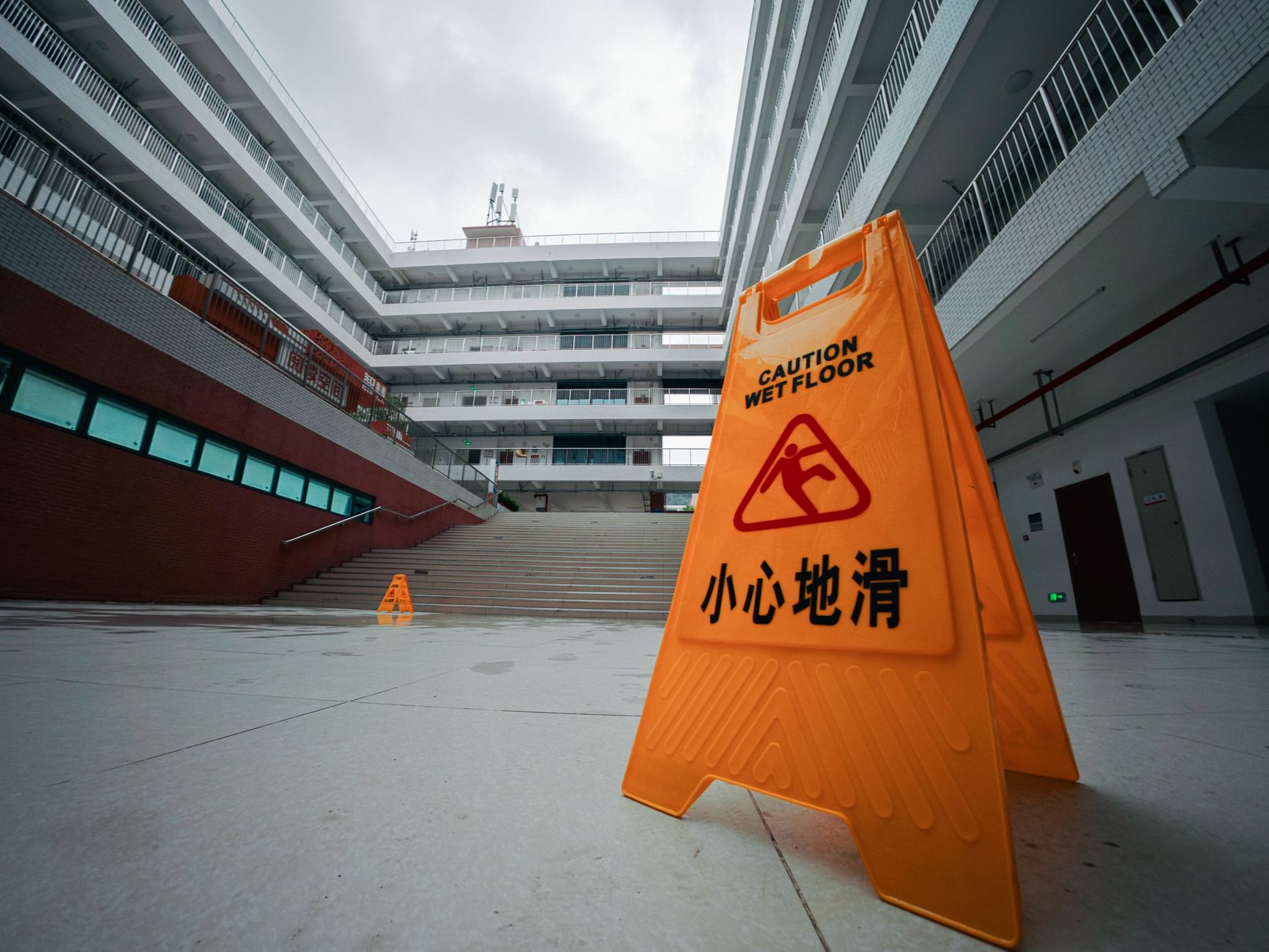
Slip, trip, and fall accidents are the most common type of premises liability claim. These occur when a visitor encounters a wet floor, uneven pavement, torn carpeting, or hidden tripping hazards. The Centers for Disease Control and Prevention highlights that falls are a leading cause of severe injuries, particularly among older adults. According to their statistics, over 800,000 patients a year are hospitalized because of a fall injury, most often resulting in traumatic brain injuries and hip fractures.
Workplace premises claims arise when an individual is injured on a job site owned by a third party. While workers compensation covers injuries regardless of fault, a third-party premises liability claim can be filed against the property owner if their negligence caused the hazard. Attorneys often reference standards set by the Occupational Safety and Health Administration to demonstrate that a property owner failed to meet established safety baselines for walking and working surfaces. OSHA data reveals that slips, trips, and falls account for nearly 700 workplace fatalities annually, underscoring the severity of these hazards.
Negligent security cases involve a plaintiff who was the victim of a violent crime, such as assault or robbery, on a commercial property. The premises liability lawyer must prove that the crime was foreseeable and that the property owner failed to implement adequate security measures, such as proper lighting, functional locks, or trained security personnel.
Inadequate maintenance claims focus on the physical deterioration of a property. This includes structural failures like collapsing balconies, broken handrails, or malfunctioning elevators. Preventative maintenance is crucial, and attorneys frequently consult guidelines from organizations like the National Safety Council to establish industry standards for hazard mitigation and routine property upkeep. The NSC reports that in recent years, over 211,000 workers were injured badly enough in falls to require days off work, proving that poor maintenance has widespread consequences.
How Do Attorneys Investigate Property Injury Claims?
Building a robust premises liability case requires immediate and aggressive investigation. Evidence in these cases can disappear quickly; spills are mopped up, broken stairs are repaired, and surveillance footage is routinely overwritten.
One of the first steps a premises liability lawyer takes is sending a spoliation letter to the property owner. This formal legal document demands the preservation of all relevant evidence, including closed-circuit television footage, maintenance logs, sweep sheets, and incident reports. If the defendant destroys this evidence after receiving the letter, the court may allow a jury to infer that the destroyed evidence would have been detrimental to the defendant’s case.
Proving notice is often the most challenging aspect of the investigation. An attorney must prove that the owner had actual notice (they knew about the hazard) or constructive notice (the hazard existed for a sufficient length of time that a reasonably diligent owner would have discovered it). To prove constructive notice in a retail spill case, a lawyer might analyze the physical characteristics of the spill, looking for footprints, dried edges, or shopping cart tracks that indicate the substance was on the floor for a prolonged period.
Expert witnesses play a vital role in these investigations. A lawyer may retain human factors engineers to testify about visual perception and why a tripping hazard was camouflaged. Lighting experts can measure illumination levels in a negligent security case, and building code experts can testify about structural violations.
What Defenses Do Property Owners Use to Avoid Liability?
Property owners and their insurance carriers employ several predictable defenses to avoid liability. A proficient injury lawyer must be prepared to counter these arguments effectively.
The open and obvious doctrine is a frequent defense. The defendant will argue that the hazard was so large, visible, and apparent that any reasonable person would have noticed and avoided it. If a hazard is deemed open and obvious, the property owner may be absolved of their duty to warn. However, a lawyer can counter this by proving that the plaintiff was foreseeably distracted or that avoiding the hazard was impossible under the circumstances.
Comparative fault is another common tactic. The defense will attempt to shift the blame to the plaintiff, arguing that the injured party was texting, running, or wearing inappropriate footwear. In states with comparative negligence laws, shifting a percentage of the blame to the plaintiff reduces the overall financial recovery, making it imperative for the plaintiff’s attorney to minimize their client’s perceived fault.
What Are Common FAQs About Premises Liability?
What is the statute of limitations for premises liability cases?
The statute of limitations varies significantly by state, typically ranging from one to four years from the date of the injury. Failing to file a lawsuit within this strict legal timeframe generally results in the injured party losing their right to seek any compensation. Certain factors, such as injuries to a minor or claims against a government entity, can alter these deadlines.
How does the open and obvious doctrine affect a claim?
If a hazard is considered open and obvious to a reasonable person, the property owner may not have a legal duty to warn visitors about it. This can severely weaken a plaintiff’s case. However, exceptions exist, such as when a property owner should anticipate that a visitor will be distracted or when the visitor has no reasonable alternative but to encounter the hazard.
Can a trespasser ever file a premises liability lawsuit?
While property owners owe minimal duties to trespassers, lawsuits are possible in specific scenarios. If an owner intentionally harms a trespasser or sets a trap, they can be held liable. Additionally, the attractive nuisance doctrine allows claims on behalf of trespassing children who are injured by dangerous, artificial conditions that naturally draw their curiosity.
What is the difference between negligent security and standard premises liability?
Standard premises liability usually involves environmental hazards like wet floors or broken stairs. Negligent security is a specialized subset that focuses on third-party criminal acts. In these cases, the attorney must prove that the property owner failed to provide adequate security measures in an area with a known history of foreseeable crime.
How do attorneys prove constructive knowledge in a slip and fall case?
Attorneys prove constructive knowledge by demonstrating that a hazard existed for a long enough period that a reasonable property owner should have discovered it. Evidence often includes surveillance video showing the timeline of the hazard, witness testimony about how long a spill was present, or physical evidence like dirt and track marks through a puddle.
Sources
- Legal Information Institute at Cornell Law School. Premises Liability Overview.
- Centers for Disease Control and Prevention. Facts About Falls.
- Occupational Safety and Health Administration. Walking-Working Surfaces.
- National Safety Council. Slips, Trips and Falls Prevention.