Getting bitten by a dog can be a traumatic experience. Beyond the physical pain, there’s the emotional distress, potential scarring, and the nagging question: “What happens now?” If you’ve suffered a dog bite injury, understanding your rights is the first step toward recovery and potential compensation. The question “Can I sue for a dog bite?” is a common one, and the answer depends on several factors.
Can I Sue for a Dog Bite? Establishing Liability
The short answer is often yes, but it’s not always a slam dunk. To successfully pursue a dog bite claim, you need to establish liability, meaning you need to prove the dog owner was responsible for your injuries. This typically involves showing the owner was negligent in some way.
What does negligence look like in a dog bite case? Some examples include:
- Knowing the dog was aggressive: Did the owner know the dog had a history of biting or aggressive behaviour? A previous bite is a strong indicator, but even aggressive growling or lunging incidents can be relevant.
- Violating leash laws: Was the dog off-leash in an area where it was required to be leashed?
- Failing to control the dog: Could the owner not physically restrain the dog, even with a leash?
- Ignoring warning signs: Did the owner disregard warning signs about the dog’s temperament or potential danger?
Proving negligence requires gathering evidence, like witness statements, photos of the scene, and any records of previous incidents involving the dog.
Documenting Your Dog Bite Injury: Building a Strong Claim
Documentation is crucial. Immediately after a dog bite, take these steps:
- Seek medical attention: Even if the bite seems minor, see a doctor to prevent infection and document the injury. Rabies is a serious concern.
- Report the bite: Contact your local animal control or police department. Reporting the bite creates an official record and helps prevent future incidents from occurring. In most jurisdictions, it’s legally required.
- Gather information: If possible, get the dog owner’s name, address, and insurance information. Additionally, request proof of the dog’s rabies vaccination.
- Take photos: Photograph your injuries, the scene of the incident, and the dog (if safe to do so).
- Keep a record: Document all medical treatments, expenses, and lost wages due to the injury.
A well-documented case significantly strengthens your position when negotiating with insurance companies or pursuing legal action.
Dog Bite Injury Law: Negligence, Strict Liability, and “One Bite” Rules
Dog bite laws vary by state. Some states follow a “one bite” rule, meaning the owner is only liable if they knew the dog was dangerous (i.e., the dog had bitten someone before). Other states have strict liability laws, holding owners responsible for any bite, regardless of whether they had prior knowledge. Still others have a combination of these rules.
Many states have moved away from the strict “one bite” rule because proving prior knowledge of aggression can be difficult. It’s crucial to understand the specific laws in your state to determine the owner’s liability.
For example, in California, Civil Code Section 3342 imposes strict liability on dog owners. This means that a dog owner is liable for damages suffered by any person bitten by the dog while in a public place or lawfully on private property, regardless of the dog’s prior history or the owner’s negligence.
Pursuing a Dog Bite Claim: Negotiation and Litigation
After gathering evidence and understanding the applicable laws, you can pursue a claim. This typically starts with contacting the dog owner’s insurance company. Most homeowner’s or renter’s insurance policies cover dog bite liability.
The insurance company will investigate the claim and may offer a settlement. It’s crucial to carefully review any settlement offer and consult with an attorney before accepting it. The initial offer is often lower than what you’re entitled to.
If negotiations fail, you may need to file a lawsuit. Litigation involves filing a complaint with the court and presenting your case before a judge or jury. This process can be complex and time-consuming, highlighting the importance of having legal representation.
Compensation for a Dog Bite Injury: What Can You Recover?
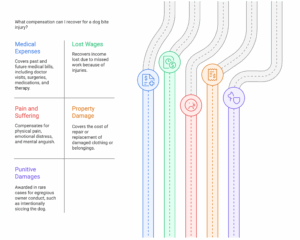
The compensation you can recover depends on the severity of your injuries and the circumstances of the bite. Common damages include:
- Medical expenses: This covers past and future medical bills, including doctor visits, surgeries, medications, and therapy.
- Lost wages: If you missed work due to your injuries, you can recover lost income.
- Pain and suffering: This compensates you for the physical pain, emotional distress, and mental anguish caused by the bite.
- Property damage: If the dog damaged your clothing or other belongings, you can recover the cost of repair or replacement.
- Punitive damages: In rare cases, if the owner’s conduct was particularly egregious (e.g., intentionally siccing the dog on someone), you may be awarded punitive damages.
For example, in 2022, a California jury awarded $3 million to a woman who suffered severe facial injuries after being bitten by a neighbour’s dog. The award included compensation for medical expenses, lost income, and pain and suffering. In another case in Texas, a child was awarded $750,000 after a dog bite resulted in permanent scarring and emotional trauma.
Seeking Legal Help for Your Dog Bite Injury: When to Consult a Lawyer
While you can handle a dog bite claim on your own, it’s often beneficial to consult with an experienced personal injury attorney, especially if:
- Your injuries are severe: Serious bites can result in significant medical expenses and long-term complications.
- The insurance company is denying your claim or offering a low settlement: An attorney can negotiate on your behalf and, if necessary, file a lawsuit.
- The dog has a history of aggression, proving prior knowledge of the dog’s dangerous behaviour can be challenging.
- You’re unsure of your rights: Dog bite laws can be complex and vary from state to state.
An attorney can evaluate your case, advise you on your legal options, and help you pursue the compensation you deserve. They will deal with the insurance company, gather evidence, and represent you in court if necessary.
Beyond financial compensation, legal action can also help prevent future incidents from occurring. A lawsuit can prompt the owner to take responsibility for their dog and ensure it’s properly restrained or even removed from the community if it poses a continuing threat.
Dog bite injuries can be devastating. Knowing your rights and taking prompt action can help you recover and move forward. If you’ve been bitten, don’t hesitate to explore your legal options.