If you’ve been injured due to someone else’s negligence, pursuing an injury claim is a route to compensation for your pain, suffering, and financial losses. But where do you even begin? The answer, surprisingly, lies in your medical records.
Medical Records: The Foundation of Your Injury Claim
Think of your medical records as the blueprint of your injury claim. They are objective, documented proof of the harm you’ve suffered and the treatment you’ve received. Without them, it’s extremely difficult to convince an insurance company, or a court, that your injuries are real and directly related to the incident in question.
Why Medical Records are Crucial to Winning Your Injury Claim
Insurance companies scrutinise injury claims meticulously. They’ll look for any reason to deny or minimise payouts. Medical records provide concrete evidence, establishing:
- Causation: They link your injuries directly to the accident. For example, an emergency room report detailing whiplash symptoms after a car accident provides vital evidence that the accident caused the injury.
- Severity of Injuries: Detailed records show the extent of your injuries, the pain you’ve endured, and the impact on your daily life. This is crucial for determining fair compensation.
- Treatment and Expenses: Medical bills and records of treatments like physiotherapy, medication, and surgery document the financial burden you’ve incurred because of the injury. A 2023 report by the Association of British Insurers (ABI) highlighted that medical expenses are a significant factor in personal injury claim settlements.
- Future Care Needs: Records can demonstrate the need for ongoing treatment or future surgeries, enabling you to claim for those projected expenses.
Understanding the Types of Medical Records Needed for Your Injury Claim
A wide range of documents can contribute to a strong injury claim:
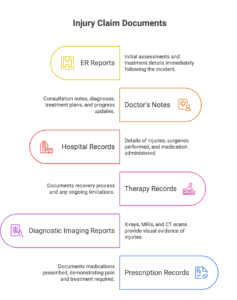
- Emergency Room (ER) Reports: These provide initial assessments and treatment details immediately following the incident.
- Doctor’s Notes: These include consultation notes, diagnoses, treatment plans, and progress updates from your GP and specialists. For example, a doctor’s note detailing restricted movement and ongoing pain three months after an accident strengthens your claim.
- Hospital Records: If you were hospitalised, records will detail the extent of your injuries, surgeries performed, and medication administered.
- Therapy Records: Physiotherapy, occupational therapy, and psychological therapy records document your recovery process and any ongoing limitations.
- Diagnostic Imaging Reports: X-rays, MRIs, and CT scans provide visual evidence of your injuries.
- Prescription Records: These document the medications you’ve been prescribed, demonstrating the pain and treatment required.
Independent Medical Examinations (IMEs): Be aware that the insurance company might request you attend an IME with their chosen doctor. While seemingly impartial, these examinations are often geared towards minimising the claim. Be polite but thorough, and ensure you obtain a copy of the IME report for your own records.
How to Obtain Your Medical Records for an Injury Claim
Under UK law, you have the right to access your medical records. Here’s how:
- Identify all relevant healthcare providers: List every doctor, hospital, and therapist involved in your treatment.
- Submit a Subject Access Request (SAR): This is a formal request for your medical records under the Data Protection Act 2018. You can usually find a SAR form on the healthcare provider’s website.
- Provide necessary information: Include your full name, date of birth, address, and details about the treatment you received.
- Pay any applicable fees: While accessing your records is generally free, some providers may charge a reasonable fee for administrative costs.
- Keep copies of all requests and correspondence.
- Electronic Health Records (EHRs): Many healthcare providers now use EHRs, making access easier. Ask if you can access your records online or receive them electronically.
Common Issues and Solutions When Gathering Medical Records for Your Injury Claim
- Delays: Healthcare providers have a legal timeframe to respond to SARs, but delays can happen. Follow up regularly and document all communication.
- Incomplete Records: Sometimes, records are missing or incomplete. Contact the healthcare provider to request the missing information.
- Difficulty Understanding Medical Jargon: Medical records can be filled with complex terminology. Don’t hesitate to ask your solicitor or a medical expert to explain anything you don’t understand.
Interpreting Your Medical Records and Building a Strong Injury Claim
Medical records alone are not enough. You need to present them in a way that clearly demonstrates the connection between the incident and your injuries. This often involves:
- Chronological Order: Presenting records in chronological order helps paint a clear picture of your treatment journey.
- Highlighting Key Information: Focus on the diagnoses, treatment plans, and any statements about the severity of your injuries or limitations.
- Working with Medical Experts: In complex cases, a medical expert can review your records and provide an opinion on the causation and prognosis of your injuries. They can also testify in court if necessary.
Addressing Pre-existing Conditions: Insurance companies often try to blame existing health problems for your injuries. However, you are entitled to compensation if the accident aggravated a pre-existing condition. Your medical records can demonstrate the state of your health before the accident and how the accident worsened your condition.
Protecting Your Medical Records and Privacy During Your Injury Claim
Medical records contain sensitive personal information. Ensure you:
- Store them securely: Keep physical copies in a safe place and password-protect electronic files.
- Only share them with necessary parties: Provide copies only to your solicitor and any medical experts involved in your case.
- Be mindful of privacy regulations: Your solicitor will be bound by confidentiality obligations.
Medical records are more than just paperwork; they are powerful tools that can significantly impact the outcome of your injury claim. By understanding their importance, knowing how to obtain them, and presenting them effectively, you can build a strong case for the compensation you deserve.