Motorcycle accidents can be devastating. If you’ve been involved in one, knowing the next steps is crucial for protecting your rights and securing the compensation you deserve. This guide provides a straightforward overview of the process.
1. Protecting Yourself Immediately After a Motorcycle Accident
Your safety and well-being are paramount.
- Safety First: Check yourself and others for injuries. Move to a safe location if possible, away from oncoming traffic.
- Call Emergency Services: Dial 999 immediately for an ambulance if anyone is injured and for the police, who will document the incident.
- Don’t Admit Fault: Even if you think you might be partially responsible, avoid apologising or admitting fault. Stick to the facts when speaking to the police.
- Exchange Information: Obtain the other driver’s name, address, phone number, insurance details (company name and policy number), and vehicle registration number. Also, gather the contact information of any witnesses.
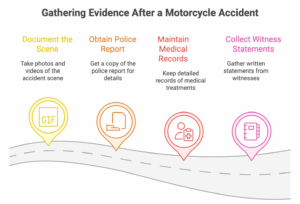
2. Gathering Evidence for Your Motorcycle Accident Case
Evidence is the foundation of any successful claim.
- Document the Scene: If possible, take photos or videos of the accident scene. Capture the damage to your motorcycle and the other vehicle, road conditions, traffic signals, and any visible injuries.
- Police Report: Obtain a copy of the police report as soon as it’s available. This report contains valuable information, including the officer’s assessment of the accident.
- Medical Records: Maintain detailed records of all medical treatments, including hospital visits, doctor’s appointments, physiotherapy sessions, and medication administration. These records prove the extent of your injuries and associated costs.
- Witness Statements: If there were any witnesses, get their contact information and ask them to provide a written statement of what they saw.
3. Understanding Your Rights in a Motorcycle Accident Case
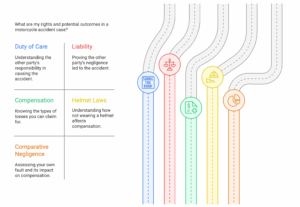
UK law protects motorcycle riders. Key aspects to understand include:
- Duty of Care: All road users have a duty of care to avoid causing harm to others. If another driver was negligent (e.g., speeding, distracted driving) and caused your accident, they are liable for your damages.
- Liability: Proving liability requires demonstrating that the other party’s negligence directly caused the accident and your injuries.
- Compensation: You may be entitled to compensation for various losses, including medical expenses, lost income, motorcycle repair or replacement costs, pain and suffering, and future care needs.
- Helmet Laws and Liability: Although helmet use is mandatory in the UK, not wearing a helmet does not automatically negate a claim. However, it can impact the amount of compensation awarded. Courts may reduce compensation if they believe a helmet would have reduced the severity of your injuries.
- Comparative Negligence: If you are partially at fault for the accident, your compensation may be reduced proportionally to your degree of fault. For example, if you are found 20% responsible, your compensation will be reduced by 20%.
4. Building Your Motorcycle Accident Case: Documentation and Legal Help
Thorough documentation is essential.
- Keep a Detailed Journal: Document your pain levels, limitations, and emotional distress resulting from the accident. This provides a personal account of your experience.
- Track Expenses: Maintain records of all expenses related to the accident, including medical bills, travel costs to appointments, and any over-the-counter medications.
- Consult a Solicitor: A solicitor specialising in motorcycle accident claims can provide invaluable guidance. They can assess the strength of your case, navigate the legal complexities, and negotiate with insurance companies on your behalf. According to the Motor Accident Solicitors Society (MASS), individuals who use a solicitor typically receive significantly higher settlements than those who represent themselves.
5. Negotiating a Settlement in Your Motorcycle Accident Case
Most motorcycle accident cases are resolved through settlement negotiations.
- Demand Letter: Your solicitor will send a demand letter to the responsible party’s insurance company, outlining the details of the accident, your injuries, and the amount of compensation you are seeking.
- Negotiation Process: The insurance company may respond with a counteroffer. Your solicitor will negotiate on your behalf to reach a fair settlement. Be prepared for a back-and-forth process.
- Settlement Agreement: If an agreement is reached, you will sign a settlement agreement releasing the responsible party from further liability. Ensure you fully understand the terms of the contract before signing.
6. Filing a Lawsuit: What Happens Next in Your Motorcycle Accident Case
If negotiations fail, filing a lawsuit may be necessary.
- Statute of Limitations: Be aware of the statute of limitations, which is the time limit for filing a lawsuit. In most cases, you have three years from the date of the accident to file a claim for personal injury in the UK.
- Legal Process: Filing a lawsuit involves preparing and filing legal documents with the court. The case will proceed through various stages, including discovery (exchanging information and evidence), and potentially a trial.
- Expert Witness Testimony: In complex cases, expert witnesses, such as accident reconstruction specialists or medical professionals, may be called upon to provide testimony supporting your claim.
7. Common Pitfalls to Avoid in Your Motorcycle Accident Case
Avoid these common mistakes to protect your claim.
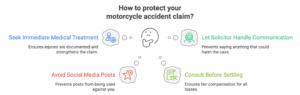
- Delaying Medical Treatment: Seek medical attention immediately, even if you don’t feel seriously injured. Delays can weaken your claim.
- Communicating Directly with the Insurance Company: Let your solicitor handle all communication with the insurance company to avoid saying anything that could harm your case.
- Posting on Social Media: Avoid posting anything about the accident or your injuries on social media, as it could be used against you.
- Settling Too Quickly: Don’t accept a settlement offer without consulting with your solicitor. Ensure the offer adequately compensates you for all your losses.
Remember, seeking legal advice from a specialist motorcycle accident solicitor is the best way to ensure your rights are protected and you receive the compensation you deserve. Good luck.